Going indoor rock climbing for the first time

MagnusTheBrewer

IN MEMORIAM
Jun 19, 2004
24,122
1,594
126
Unless there are others who haven't climbed before, you WILL lose so, get ready to buy the beer. One tip I can give you is to keep moving. Sounds simple but, the greatest mistake noob climbers make is stopping to find the best route. Do that before you start the climb.
 

grrl

Diamond Member
Jun 21, 2001
6,204
1
0
Originally posted by: MagnusTheBrewer
Unless there are others who haven't climbed before, you WILL lose so, get ready to buy the beer. One tip I can give you is to keep moving. Sounds simple but, the greatest mistake noob climbers make is stopping to find the best route. Do that before you start the climb.

But that's not easy to do when you don't know how to properly read a route.
 

ja1484

Platinum Member
Dec 31, 2007
2,438
2
0
Ugh, god.

Where to begin...

First, how the hell do you lose at climbing?

As for what muscle groups are worked, the answer is all of them - eventually. Depending on what's being climbed.

Indoor wall climbing is not to be confused with rock climbing.

There's more, but I question whether it's worth going into that level of detail. Just try to have fun.
 

Sahakiel

Golden Member
Oct 19, 2001
1,746
0
86
Originally posted by: holden j caufield
It's one of those walls at a gym, what shoes do I wear

Rent them there.
Unless it's one of those baby walls, then just wear sneakers because every foothold is 3 inches deep.

As mentioned before, scout your route before you go up. Stopping to look around saps energy.

If you end up having to stop for any reason, find a spot where you're either basically standing or need only one arm to hang.

Stay close to the wall unless you're lounging underneath an overhang.

Use your legs to push, they're stronger.

Most important: Stretch first.
 

herm0016

Diamond Member
Feb 26, 2005
8,524
1,132
126
indoor is fun. we climbed a few times a week when i was in tx for 3 months. dont go to compete, go to have fun. try some bouldering first (horizontal travel around the base of the walls) to figure out how to best grip different holds. you arms will be sore first, your fingers, your wrists. do not be afraid to fall, the more comfortable you are up there the more risk you will take. indoor climbing is different from outdoor, but only easier if the people doing the walls have no clue. good walls and routes can be very challenging. you can normally get shoes and a harness at the place. i would bring a pair of oldish socks to wear as the rental shoes are usually not too clean/could be wore pretty good.
 

illusion88

Lifer
Oct 2, 2001
13,164
3
81
Rent some rock shoes from the gym. If you can't do that, wear the show that has the stiffest sole you have. Don't wear big boots. Keep looking at your feet, your footwork will get you to the top. Don't forget to breath. The walls aren't that tall, so focus on the top and you can get there. The biggest mistake that most beginner and intermediate rock climbers make is thinking it's all in their arms. Keep your hips close to the wall, close enough to make love to it, and work those feet!

If you stop on the wall, do it with a fully stretched arm, that uses less energy.

So whats the competition?
 

GoSharks

Diamond Member
Nov 29, 1999
3,053
0
76
Right up my alley. I redpointed 5.13a outside the other weekend. Any particular questions? :p

Boots actually aren't a horrible idea because they typically have stiff soles. Their weight and general bulkiness would be quite detrimental though. I can actually climb pretty decently in a pair of Chacos (sandals) because they are relatively stiff. At the same time, my climbing shoes are quite soft and sensitive, but with very sticky rubber.

Otherwise, I definitely recommend renting a pair of shoes from the gym. They will absolutely help out because of sticky rubber and a generally smaller profile than a regular shoe, allowing you to better use the holds on the wall.

Keep your arms as straight as possible for as long as possible. This serves two purposes:
1. Your weight will be supported mostly by your skeleton and it takes much less energy to hang on with straight arms than with bent arms.
2. it puts as much weight as you can onto your feet. You should never feel stretched out in that you are on your tiptoes reaching for the next hold - if you find yourself in that position, move one or both of your feet up to a higher foothold, and then move your hands up. In the ideal situation, this is the only time where your arms will be bent.

Try not to get caught up and hang onto the holds for dear life. If you get stuck, don't be afraid to just hang there - otherwise you will get burnt out extremely quickly and you will have a very short session. If you do find that you don't want to hang on the rope for whatever reason, remember to keep your arms straight.

This might be difficult at first, but try and determine a sequence for the particular route or problem that you will be on. Typically for beginner climbs, there will be a rather obvious right/left/right/left sequence to the holds.

Don't forget your feet. Good footwork and technique are what separates good climbers from the "bad."

One more thing, the gym you go to will probably have their climbs rated on the YDS system. Anything below 5.7 will be a good initial climb to get on, and you can progress from there depending on how you feel. If you are bouldering, (scroll down on that page) you will want to start on V0 or VB if they have it. You will find that each individual grade on the YDS scale is much easier to jump than a grade on the bouldering V-scale.

Just as a FYI, any particular gym in this country (outside of Boulder, CO) will probably have grades between 5.6/7 to 5.12d or so, and V0 to V8-10.

 

Koing

Elite Member <br> Super Moderator<br> Health and F
Oct 11, 2000
16,843
2
0
The harder climbs will be harder due to small holds that will test your grip strength. Anyone with decent upperbody can clmib an over hang with huge grips, few can climb a big over hang with small small grips. Your grip will fall to pieces unless your experienced.

Good advice from GoSharks.

I'd also mention staying close to the wall (not having your ass be too far away) and staying balanced and not all twisted up the wall will help you out a lot also.

Have fun!

Koing
 

geno

Lifer
Dec 26, 1999
25,074
4
0
Use your legs more than your arms. If you don't, you'll fatigue your arms and then you're going nowhere.
 

holden j caufield

Diamond Member
Dec 30, 1999
6,324
10
81
schedule didn't work for some people. Either this weekend or next. BTW what kind of attire do I wear for my legs. If I wear my shorts I'm sure the people below won't appreciate seeing my hanes boxers. So do I wear pants to this thing?
 

GoSharks

Diamond Member
Nov 29, 1999
3,053
0
76
Nobody will care about your shorts, but pants are more protective of your legs. If you slip on a foothold, there is a chance that you'll bang your knee or shin on another hold.

I actually wear 3/4s length pants sometimes (yes, capris...) when it's warm out but I still want protection for my knees/legs.
 

olds

Elite Member
Mar 3, 2000
50,126
780
126
schedule didn't work for some people. Either this weekend or next. BTW what kind of attire do I wear for my legs. If I wear my shorts I'm sure the people below won't appreciate seeing my hanes boxers. So do I wear pants to this thing?

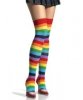
Be usre to wear leggings.
 

Attachments

  • leggings.jpg
    leggings.jpg
    6.2 KB · Views: 0