• We’re currently investigating an issue related to the forum theme and styling that is impacting page layout and visual formatting. The problem has been identified, and we are actively working on a resolution. There is no impact to user data or functionality, this is strictly a front-end display issue. We’ll post an update once the fix has been deployed. Thanks for your patience while we get this sorted.

Discussion Geekbench 6 released and calibrated against Core i7-12700

Last edited:
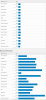
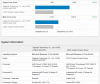
I got these scores with my OC 13600K (5500+4200MHz):

geek6b.png


EDIT: When running it for the second time, the application crashed in the Clang part. Upped a voltage a bit and then I got a higher score above.
 
Last edited:
Sounds purpose designed to disadvantage homogeneous multi-core designs.
On the other hand the longer run time as result of larger data sets is good.
And finally they removed AES/XTS score. 🙂
 
Dammit, it crashed again! Running these various tasks may be good for quick testing of OC stability.

(I hope that the new version is not buggy itself)
 
The multi-threaded test appears to be lightly threaded by today's standards, outside of the Clang compile test. Many tests don't even hit 25% utilization across the 24 threads. Only the Clang test seems to load above 50%, at least for any significant length of time that I could see it while monitoring.
 
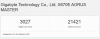
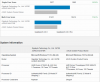
Here's my 5900x with PPT lowered to ~120W (I don't remember exactly off the top of my head) and slight negative offsets with curve optimizer.

View attachment 76467

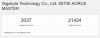
Better score than my 5900X (at default PPT too) score of 2237/12242
 
Coz heavy multithreaded would favor AMD!

WOW. Are they being paid off by Intel?
Lightly multithreaded loads favor AMD, because they have all cores large, fewer threads hit weaker E cores on Intel CPUs, but not that many of them to reap the full benefits of them.

And in spite of this 13600K at stock has 88% ST and 77% MT performance of the 7950X at half the price. Impressive value.
 
Ligtly multithreaded loads favor AMD, because they have all cores large, fewer threads hit weaker E cores on Intel CPUs, but not that many of them to reap the full benefits of them.

And in spite of this 13600K at stock has 88% ST and 77% MT performance of the 7950X at half the price. Impressive value.
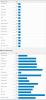
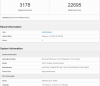
Compare it to this one..

1676399482552.png

 
Ligtly multithreaded loads favor AMD, because they have all cores large, fewer threads hit weaker E cores on Intel CPUs, but not that many of them to reap the full benefits of them.

And in spite of this 13600K at stock has 88% SST and 77% MT of the 7950X at half the price. Impressive value.

This would only be true if Intel's CPUs had only a few P-cores, but they have 6+. From my (admittedly very brief) testing, the vast majority of MT tests only load 6 or less threads.

Edit: After another quick test where I upped my polling rate, I take back this statement somewhat. Most tests seem to use ~12 threads on my CPU with Clang using ~20. I didn't see many of them before because the higher load only shows up for less than a second, which was what my polling rate was set to. There are still a few that seem to only load 2, maybe 4 threads at most. This is still all just estimates with a higher polling rate though. An actual thread utilization measurement across the tests would be better. This is also just reported utilization, I don't know if the sub test performance actually scales or not.
 
Last edited:
Back
Top