It might be judicious to start by studying the broad effect of the Depression on the American people. The main effect of the depression was to bring poverty and unemployment over the country. In fact, according to National Industrial Conference Board, there were 12,5 million jobless or 13 million according to the American Federation of Labour.
[3] The Americans could no longer rely on wages; some used the money of their life insurance or borrowed from relatives.
[4] There was a drop of forty per cent in the amount of money paid a s salaries. The cut in salaries was general and affected every profession.
[5] Dixon Wecter writes that the effects of the Depression were not felt in the first year of the crisis; the Americans were ‘reluctant to admit the Hard Times’.
[6] The hard times were not so hard in at the beginning of the depression. However, after two years, poverty and unemployment became rampant and obvious.
[7] Dixon even says that the severity and hopelessness of the crisis were without parallel.
[8] Indeed, a part of the American people experience extreme poverty. For instance, in New York, there was the ‘Hoover Valley’, a settlement in Central Park while other homeless lived in abandoned factories.
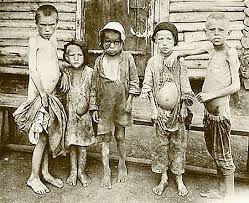
[9] Poverty was so harsh so that 29 people died of starvation in New York, and the Philadelphia’s Community Health centre experienced a rise of sixty per cent in its malnutrition diagnoses between 1928 and 1932.[10]Restaurants fed the starving with leftover and garbage eating became a common practice.
[11] Hence, it can be noted that the hard times were hard because it consisted in a drop in income and the appearance of extreme poverty. The Hard Times where so hard so that the general standard of living worsen and a large part of the population could not rely on the economic system.






 Facebook
 Twitter