Spellbinder2050
Junior Member
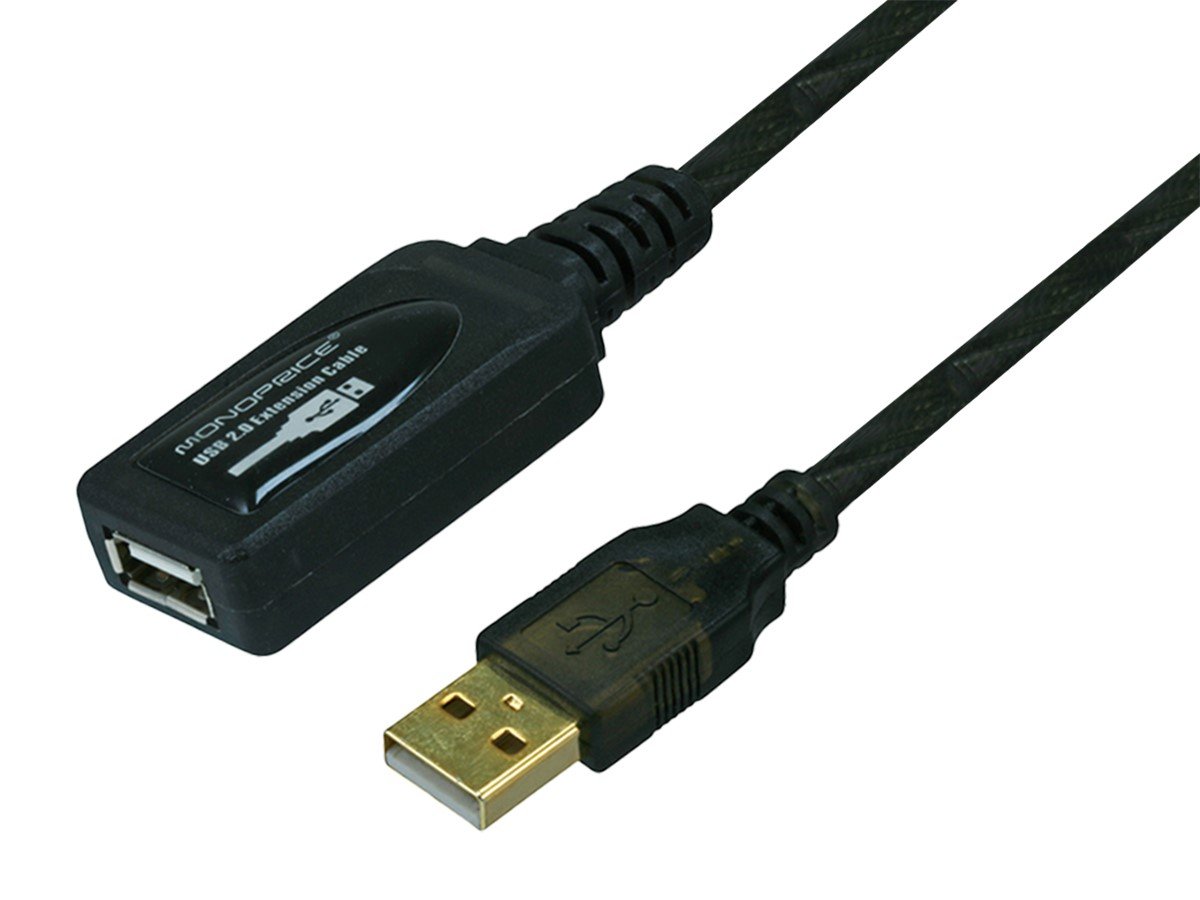
I'm trying to get my hands on a 25ft USB extender cable, along with an HDMI cable, to run from my PC in the room into the living room and then attach a USB hub to it, so I can use a wireless keyboard / mouse / PS4 controller to use on my LCD screen. I plan to do gaming with keyb/mouse, but also with the game-pad.
I'm getting mixed information. The spec for USB 2.0 says that setups beyond 5 meters (approx 16 ft 5in) will not work. It also says that "repeaters" beyond that spec will "regenerate the USB signal."
3 important questions about this:
1. When they say that USB is limited by 5 meters, are they talking about the power that can go through that cable or the data itself? (I don't really know how a USB cable works internally, but I'm assuming there's a data + power rail on it)
2. which aspect of whats traveling through the cable will be "regenerated" by a repeater?
3. Practically speaking, and in terms of input delay (latency), would I be better off with a 25 ft cable with or without a repeater if I plan to put a USB hub with 4 ports at the end of it?
What if I choose to only use the PS4 pad without a USB hub, which cable would be preferable?
Thanks to anyone who takes the time to read this. 🙂
I'm getting mixed information. The spec for USB 2.0 says that setups beyond 5 meters (approx 16 ft 5in) will not work. It also says that "repeaters" beyond that spec will "regenerate the USB signal."
3 important questions about this:
1. When they say that USB is limited by 5 meters, are they talking about the power that can go through that cable or the data itself? (I don't really know how a USB cable works internally, but I'm assuming there's a data + power rail on it)
2. which aspect of whats traveling through the cable will be "regenerated" by a repeater?
3. Practically speaking, and in terms of input delay (latency), would I be better off with a 25 ft cable with or without a repeater if I plan to put a USB hub with 4 ports at the end of it?
What if I choose to only use the PS4 pad without a USB hub, which cable would be preferable?
Thanks to anyone who takes the time to read this. 🙂