• We’re currently investigating an issue related to the forum theme and styling that is impacting page layout and visual formatting. The problem has been identified, and we are actively working on a resolution. There is no impact to user data or functionality, this is strictly a front-end display issue. We’ll post an update once the fix has been deployed. Thanks for your patience while we get this sorted.

Discussion CPU boost frequency and marketing

Page 7 - Seeking answers? Join the AnandTech community: where nearly half-a-million members share solutions and discuss the latest tech.

Is AMD marketed boost frequencies for Ryzen 3000 fine?


  • Total voters
    84
Maybe newer uEFI will make my 3600 exceed the stated 4.2 GHz? Not gonna hold my breath tho.

I did some more single load CB (r20,r15,r11.5) runs last night using hwinfo64 to monitor the clocks. Once started I reset the info data. All cores would hit the 4.2 Ghz max during the runs while 1 or two, sometimes 3 would boost to 4.2 GHz. Always 1 at minimum at 4.2 GHz. 6 out of 6 boosted to 4.2 GHz by end of runs. 1 exception was r11.5 only 5 of 6 hit 4.2 GHz.

Going to drop the GPU back into my 3700x tomorrow and play around some more with it.
 
Maybe newer uEFI will make my 3600 exceed the stated 4.2 GHz?
One one of my boards (I've had my R5 3600 in both my Asus B450-F ROG STRIX ATX - current board, and my Gigabyte B450 Pro Wifi ATX - first board I tried it in), when running HWMonitor, showed in the "Max" column for Clock Speeds, something like 4.25Ghz, or maybe 4.225Ghz or something. It was boosting past 4.2Ghz. I don't see that behavior any more with the 1.0.0.3AB AGESA on the Asus board, but it certainly was interesting.
 
AMD has updated the Ryzen product pages to be more specific about what "max boost" means: "Max Boost Clock is the maximum single-core frequency at which the processor is capable of operating under nominal conditions."

Interestingly, AMD removed that popup for a while, before bringing it back with slightly different wording (see Ryzen specifications). It now says:

"Max boost for AMD Ryzen processors is the maximum frequency achievable by a single core on the processor running a bursty single-threaded workload. Max boost will vary based on several factors, including, but not limited to: thermal paste; system cooling; motherboard design and BIOS; the latest AMD chipset driver; and the latest OS updates."

AMD's Senior Technical Marketing Manager, Robert Hallock, further clarifies, in his recent blog post on the issue (see AMD Community Blogs), when you should and should not expect to see the Max Boost frequency:

"Following the installation of the latest BIOS update [with AGESA version 1003ABBA], a consumer running a bursty, single threaded application on a PC with the latest software updates and adequate voltage and thermal headroom should see the maximum boost frequency of their processor. PCMark 10 is a good proxy for a user to test the maximum boost frequency of the processor in their system. It is fully expected that if users run a workload like Cinebench, which runs for an extended period of time, the operating frequencies may be lower than maximum throughout the run."

Note that, unlike previous generations of Ryzen, Max Boost now means max. It is not the sustained single-core frequency, and there is no longer any extended frequency range (XFR) beyond the Max Boost number printed on the box.

 
Hardware Unboxed has now tested AGESA version 1003ABBA and finds that it fixes the Max Boost clock issue. Several CPU and motherboard models are tested. There are some small gains to be had in single-thread benchmarks and a few games, but nothing material.

 
Those clock hounds must be pleased that their CPU now clocks 0.025GHz higher for a net zero increase in performance.
If it performs, it performs.

The way some were moaning you'd think they were expecting a 10% uplift in performance for their 0.025GHz (or 0.5%).

You rang? I'm an old clock dog these days. Give me throughput, not micro-second nano-boosts.

However, must give the INTELigentsia kudos for making a PR mountain out of a fractional narrative. The bluesies can't taunt with IPC anymore, so the battle must be fought down to the last megahertz. Well done, Intel's key influencers. May you enjoy the next 18% of mitigations.
 
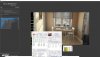
in cinebench my cores went no faster then 4050ghz with my 3600x thats rated at 4.4ghz boost. took the shot right at the very end of the run. temp was at 68c at the end of the test.
 

Attachments

  • pc11.jpg
    pc11.jpg
    1.1 MB · Views: 4
in cinebench my cores went no faster then 4050ghz with my 3600x thats rated at 4.4ghz boost. took the shot right at the very end of the run. temp was at 68c at the end of the test.
That boost is when only ONE core is running. cinebench. You have to choose the option for single core to even get close to that.
 
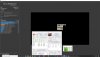
i selected single core test and it only had one box running the test then seeing the 6 i saw in the other test, and single core test in the upper left has a checkmark next to it, so what might i be missing. also i was being sarcastic about not hitting 4.4, for 4350 is close enough for me and im happy 🙂
 
i selected single core test and it only had one box running the test then seeing the 6 i saw in the other test, and single core test in the upper left has a checkmark next to it, so what might i be missing. also i was being sarcastic about not hitting 4.4, for 4350 is close enough for me and im happy 🙂
yea, 4350 is close enough. The pic did not show that you had run single core.
 
yeah, i went into advanced and selected single core test, and that pic shows only 1 box being rendered, unlike my 1st pic thats shows 6 of them going 😉
 
Back
Top