
-
We’re currently investigating an issue related to the forum theme and styling that is impacting page layout and visual formatting. The problem has been identified, and we are actively working on a resolution. There is no impact to user data or functionality, this is strictly a front-end display issue. We’ll post an update once the fix has been deployed. Thanks for your patience while we get this sorted.
You are using an out of date browser. It may not display this or other websites correctly.
You should upgrade or use an alternative browser.
You should upgrade or use an alternative browser.
Question AMD 1Q21 Earnings Results
- Thread starter Hitman928
- Start date
Computing and Graphics segment revenue was $2.10 billion, up 46 percent year-over-year and 7 percent quarter-over-quarter primarily driven by Ryzen processor and Radeon graphics product sales growth.
Enterprise, Embedded and Semi-Custom segment revenue was $1.35 billion, up 286 percent year-over-year and 5 percent quarter-over-quarter. The year-over-year increase was driven by higher semi-custom product sales and EPYC processor revenue. The quarter-over-quarter increase was driven by higher EPYC processor sales partially offset by lower semi-custom product sales.
- Client processor average selling price (ASP) grew year-over-year and quarter-over-quarter driven by a richer mix of Ryzen desktop and notebook processor sales.
- GPU ASP was higher year-over-year and quarter-over-quarter driven by high-end Radeon graphics products.
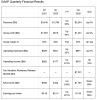

AMD Reports First Quarter 2021 Financial Results
 seekingalpha.com
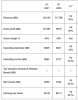
Edit: replaced table with one that includes Q/Q comparison. EPS was down Q/Q due to a one time tax benefit, if that is taken out then EPS grew Q/Q as well.
Attachments
Last edited:


Gideon
Platinum Member
Gee, AMD's server CPUs seem to be so much better digestable than Intel's and that's on top of extremely strong client sales.AMD Reports First Quarter 2021 Financial Results
Intel's in comparison:

Gee, AMD's server CPUs seem to be so much better digestable than Intel's and that's on top of extremely strong client sales.
Intel's in comparison:
AMD doesn't have the volume yet to really hurt Intel so I'm sure Intel's digestion comments are true to some extent, but they are definitely trying to use it to mask the fact that they are both losing market share to AMD and ARM solutions as well as having to offer significant discounts in the presence of stiff competition. It worked for a little while but the analysts are starting to realize that Intel has been using the same digestion excuse for several quarters in a row while their competitors are experiencing growth.
I've said for a while now that where Intel's real potential trouble comes is at their 7 nm node. At that point, AMD will have their leading designs on 5 nm with a still very viable option in Milan on 7 nm all while TSMC is expanding capacity. AMD will be in a much better position to really take a lot of volume from Intel at that point (not replace all the volume but take a much bigger bite than they can now). If Intel's 7nm hits some major hiccups like 10 nm did, Intel is in really serious trouble at that point and will probably have to really go through quite a shakeup to a more viable business model. If Intel really hits 7nm out of the park and can hit high volume numbers, then they can still play the 800 lb gorilla, at least for a little while longer. Based upon the EUV equipment purchases we know about, this seems unlikely.

Saylick
Diamond Member
I think this is the crucial piece of the puzzle. TSMC and Samsung have hoarded EUV machines and they are essential to the fabrication of smaller nodes. Intel can have the perfect 7nm recipe, but without EUV machines, I don't see how they can make enough 7nm dies to move their entire product stack over to the latest nodes in order to compete with AMD and the like. During ASML's last earnings, only 3% of their revenue went to North America, while something like 80+% went to Taiwan and South Korea, with the remainder being China and the rest of the world. Their saving grace is that AMD is supply constrained, so it's a race between when AMD can get enough of their stack on TSMC's latest nodes and when Intel can get enough volume on their latest node.AMD doesn't have the volume yet to really hurt Intel so I'm sure Intel's digestion comments are true to some extent, but they are definitely trying to use it to mask the fact that they are both losing market share to AMD and ARM solutions as well as having to offer significant discounts in the presence of stiff competition. It worked for a little while but the analysts are starting to realize that Intel has been using the same digestion excuse for several quarters in a row while their competitors are experiencing growth.
I've said for a while now that where Intel's real potential trouble comes is at their 7 nm node. At that point, AMD will have their leading designs on 5 nm with a still very viable option in Milan on 7 nm all while TSMC is expanding capacity. AMD will be in a much better position to really take a lot of volume from Intel at that point (not replace all the volume but take a much bigger bite than they can now). If Intel's 7nm hits some major hiccups like 10 nm did, Intel is in really serious trouble at that point and will probably have to really go through quite a shakeup to a more viable business model. If Intel really hits 7nm out of the park and can hit high volume numbers, then they can still play the 800 lb gorilla, at least for a little while longer. Based upon the EUV equipment purchases we know about, this seems unlikely.
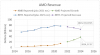
For those saying that Intel continues to print money and AMD's revenue are no concern, here is a comparison of their revenues over the last few years as well as AMD's stated projected growth model results appended to the end. I then assumed (obviously a very large assumption) that half of AMD's growth Y/Y comes from Intel. If this holds, in just 3 years, AMD becomes a very formidable competitor (in terms of revenue). I plotted to 2024 because that's when Intel's 7 nm should be in full swing assuming no major delays (yes Intel is saying 7 nm in 2023 but it will take some time to get it to be really high volume and start to outpace all the 10 nm and 14 nm production).
Obviously this is a very basic 'what if' scenario, but at least on AMD's side, they have been consistently hitting or exceeding their projections for the last couple of years and have created a lot of confidence that they will continue to do so going forward. There are still lots of variables at play as TAM continues to expand, ARM becomes more competitive, FAB costs increase, etc. etc., so this is just a small piece of what could be, but you can see that even if things go well for Intel, they will most likely have to find ways to make up for a significant amount of lost revenue to AMD in the next few years. AMD's console/semi-custom revenue isn't expected to see significant growth (and will most likely shrink) in the next few years, so almost all their growth should be CPU/GPU related and most likely heavy on the CPU.
Obviously this is a very basic 'what if' scenario, but at least on AMD's side, they have been consistently hitting or exceeding their projections for the last couple of years and have created a lot of confidence that they will continue to do so going forward. There are still lots of variables at play as TAM continues to expand, ARM becomes more competitive, FAB costs increase, etc. etc., so this is just a small piece of what could be, but you can see that even if things go well for Intel, they will most likely have to find ways to make up for a significant amount of lost revenue to AMD in the next few years. AMD's console/semi-custom revenue isn't expected to see significant growth (and will most likely shrink) in the next few years, so almost all their growth should be CPU/GPU related and most likely heavy on the CPU.
Attachments
Earnings call quotes:
In notebooks, we delivered our sixth straight quarter of record mobile processor revenue, based on sustained demand for Ryzen 4,000 series processors and the launch of our new Ryzen 5000 series processors. Ryzen Mobile 5000 series processor revenue has ramped twice as fast as the prior generation.
In graphics, revenue increased by a strong double-digit percentage year-over-year and sequentially, led by channel sales growth as revenue from our high-end Radeon 6000 GPUs more than doubled from the prior quarter. . . We expect Radeon 6000 series GPU sales to grow significantly over the coming quarters as we ramp production.
Data center graphics revenue grew year-over-year and sequentially, driven largely by adoption of Instinct accelerators across cloud and HPC customers. We are making great progress on our data center GPU roadmaps and expect revenue to grow in the second half of the year as we begin the production ramp of our next generation AMD Instinct GPU to support multiple HPC wins, including Frontier, the first U.S. exascale supercomputer.
In server, we delivered another quarter of record server processor revenue as EPYC processor sales more than doubled year-over-year and grew by a strong double-digit percentage sequentially.
Cloud demand was particularly strong in the quarter as Tier 1 providers expanded their EPYC processors deployments to power more of their internal infrastructure and introduced 11 new AMD powered instances.
We expect the number of AMD powered instances to double by the end of the year to 400 as Microsoft Azure, Amazon, Google, IBM, Oracle and Tencent significantly expand their offerings with third gen EPYC processors.
2021 marks an inflection point in terms of the scale, ecosystem support and customer adoption of our EPYC and Instinct processors.
In the first quarter, data center product revenue more than doubled year-over-year and represented a high-teens percentage of our overall revenue. We expect data center product revenue to grow significantly as we go through the year, driven by our strong pipeline of new cloud, enterprise and HPC wins.
We significantly accelerated our business in the first quarter and now see higher growth for the year, driven by increased customer adoption for our products, overall market strength and additional supply from our supply chain partners.
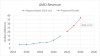
For those saying that Intel continues to print money and AMD's revenue are no concern, here is a comparison of their revenues over the last few years as well as AMD's stated projected growth model results appended to the end.
View attachment 43687
Does Intel have a projected growth chart through 2024? This graphic is pretty useless and bias if you're only using the estimates from AMD. You would also need to take into account what Intel is projecting. They are moving in to manufacturing Car CPUs and such revenue generators. It's really not a fair comparison.
Does Intel have a projected growth chart through 2024? This graphic is pretty useless and bias if you're only using the estimates from AMD. You would also need to take into account what Intel is projecting. They are moving in to manufacturing Car CPUs and such revenue generators. It's really not a fair comparison.
Intel hasn't given any growth projections as a whole outside of projecting a slight revenue decline in 2021. That's a big reason why their forward P/E is so low compared to others in their sector when we're in the midst of one of the biggest semiconductor booms in history. Intel has also had quite a few misses on their own quarterly estimates recently when it comes to their most lucrative division (DC) so even if they gave a projected growth model, I don't know how many people would have confidence in them to meet it. All of their talk recently has pretty much just been trying to hold the line and trying to talk up 7 nm progress.
I gave about as many caveats as I could think of when making the chart and tried to make it clear that I'm not trying to be prophetic here, just trying to make it clear the growth path AMD is on and the potential effects of that growth, but you're free to ignore it if you wish.
That's why I asked if the provided a growth chart. I just know they are ramping up manufacturing and going to be selling CPUS to the auto industry and such. I wasn't sure if that was taken into accountability as their grown could expand because they are looking at new markets. TSMC has already stated that CPUs manufacturing is going to have supply issues in to 2022. All of those variations aren't taken into consideration with just AMDs growth chart. That's all. Didn't suggest you were a prophet, lol.Intel hasn't given any growth projections as a whole outside of projecting a slight revenue decline in 2021.
I think this is the crucial piece of the puzzle. TSMC and Samsung have hoarded EUV machines and they are essential to the fabrication of smaller nodes. Intel can have the perfect 7nm recipe, but without EUV machines, I don't see how they can make enough 7nm dies to move their entire product stack over to the latest nodes in order to compete with AMD and the like. During ASML's last earnings, only 3% of their revenue went to North America, while something like 80+% went to Taiwan and South Korea, with the remainder being China and the rest of the world. Their saving grace is that AMD is supply constrained, so it's a race between when AMD can get enough of their stack on TSMC's latest nodes and when Intel can get enough volume on their latest node.
Intel has EUV machines. That being said, if they need more, that is on them, not TSMC, and certainly not AMD.
The reason why AMD is successful these days isn't because of EUV, TSMC, Jim Keller, or any other factor except that AMD has focused completely on execution since 2017 (actually 2015 when Lisa Su and others rallied behind AMD and turned things around). Intel has ignored AMD as well as other competitors and has continued the mentality of a large corporate entity that is under the assumption that they are too big to fail. That mentality actually works most of the time. However, lntel is in a unique position in that 100% of it's product offerings have competition. Intel has not been able to successfully differentiate itself from anyone in recent years.
Even so, Intel won't fail. They will gradually slide for decades, until the point they become another IBM (somehow IBM defies logic these days, along with other companies like Oracle).
Don't get me wrong, I believe Intel still has potential, but honestly? They need to divest themselves of all things silicon related and become a holding group that has no control over the child entities outside of a typical investor/startup relationship. The CPU design guys and the fab guys need to become startups so that they can focus on agile execution and not on corporate nonsense. Management needs to go. Dress codes need to go. Marketing needs to go (ok, MOST of marketing). Look at startups that don't care about branding or instruction sets and build something they can/will embrace. Take away the billions of dollars that Intel currently has, and their fab, GPU, and CPU teams will flourish. Why? They will have no other option.

DisEnchantment
Golden Member
The threat is not from ARM Ltd. mainly, but big Customers like Amazon, Tencent, Alibaba developing everything in house. They could be using RISC-V if they wish.A lot of questions on the threat of ARM. Dr. Su stated it nicely - it’s not x86 vs ARM, it’s creating the chip most appropriate for customer’s application and a future ARM based chip is not out of the question.
Even if AMD were to develop an ARM Server CPU, which if they wish, they could, Amazon would use their inhouse chip anyway. It is not like Amazon is buying loads of ARM chips from Ampere.
Amazon would continue to use their own chips even if behind in performance. This is something AMD cannot do anything. What they should continue to do is continue to improve with predictability and many clients will stick around.
On the other hand, AMD partnering with Azure is a big win for both.
Azure right now is deploying several workflows which are uniquely powered by advantages of x86 legacy code. Like Siemens NX, CAD workflows, EDA etc. Several HPC clients are now using Azure HBv3 services for their HPC needs. Big win for MS and AMD. I am very sure AWS will not ignore this. These are usually clients with big pockets not mom and pop webhosting.
This is why they need to innovate in many areas like having heterogenous systems, complete top to bottom SW stack, Accelerated compute etc because they still hold many advantages there.
dacostafilipe
Senior member
I think this is the crucial piece of the puzzle. TSMC and Samsung have hoarded EUV machines and they are essential to the fabrication of smaller nodes. Intel can have the perfect 7nm recipe, but without EUV machines, I don't see how they can make enough 7nm dies to move their entire product stack over to the latest nodes in order to compete with AMD and the like. During ASML's last earnings, only 3% of their revenue went to North America, while something like 80+% went to Taiwan and South Korea, with the remainder being China and the rest of the world. Their saving grace is that AMD is supply constrained, so it's a race between when AMD can get enough of their stack on TSMC's latest nodes and when Intel can get enough volume on their latest node.
As EUV is an American tech (that Intel invested in!), licensed to ASML, it could go bad really fast if Intel would try to lobby this out ... :/
A lot of questions on the threat of ARM. Dr. Su stated it nicely - it’s not x86 vs ARM, it’s creating the chip most appropriate for customer’s application and a future ARM based chip is not out of the question.
I see ARM and x86 co-existing; I don't see how ARM would ever replace x86 due to the legacy and everything built around it, both architectures have pluses and minuses.
DisEnchantment
Golden Member
Lots of American companies are actually involved, Lam Research, Applied Materials etc , ASML anyway heeded to American pressure in the past, if Intel play the lobby card they will get something for sure. Not to mention many EDA companies involved in designing toolkits for TSMC.As EUV is an American tech (that Intel invested in!), licensed to ASML, it could go bad really fast if Intel would try to lobby this out ... :/
More like only some parts of it. Others belongs to other countries. But you need all of them for the litho machines to work. That's why US can still have their say in it.As EUV is an American tech (that Intel invested in!), licensed to ASML, it could go bad really fast if Intel would try to lobby this out ... :/
Last edited:
For those saying that Intel continues to print money and AMD's revenue are no concern, here is a comparison of their revenues over the last few years as well as AMD's stated projected growth model results appended to the end. I then assumed (obviously a very large assumption) that half of AMD's growth Y/Y comes from Intel. If this holds, in just 3 years, AMD becomes a very formidable competitor (in terms of revenue). I plotted to 2024 because that's when Intel's 7 nm should be in full swing assuming no major delays (yes Intel is saying 7 nm in 2023 but it will take some time to get it to be really high volume and start to outpace all the 10 nm and 14 nm production).
Obviously this is a very basic 'what if' scenario, but at least on AMD's side, they have been consistently hitting or exceeding their projections for the last couple of years and have created a lot of confidence that they will continue to do so going forward. There are still lots of variables at play as TAM continues to expand, ARM becomes more competitive, FAB costs increase, etc. etc., so this is just a small piece of what could be, but you can see that even if things go well for Intel, they will most likely have to find ways to make up for a significant amount of lost revenue to AMD in the next few years. AMD's console/semi-custom revenue isn't expected to see significant growth (and will most likely shrink) in the next few years, so almost all their growth should be CPU/GPU related and most likely heavy on the CPU.
View attachment 43687
While the above is interesting and all, it just comes down to "build a better mousetrap".
I was happy as all get out when Zen1 8c/16t dropped, price / perf was great.
So far in the past 6 months I have bought 1 5700U laptop, 2 5800X chips (one new, one used) and one 3700X desktop.
I do not consider Intel as having a good value product, and I am grumpy about years of being sold the same thing incrementally updated.
I imagine a large swath of enthusiasts, consumers, and enterprise buyers are tired of Intel's antics also.
So AMD just needs to keep selling the better mouse trap.
The threat is not from ARM Ltd. mainly, but big Customers like Amazon, Tencent, Alibaba developing everything in house. They could be using RISC-V if they wish.
Even if AMD were to develop an ARM Server CPU, which if they wish, they could, Amazon would use their inhouse chip anyway. It is not like Amazon is buying loads of ARM chips from Ampere.
Amazon would continue to use their own chips even if behind in performance. This is something AMD cannot do anything. What they should continue to do is continue to improve with predictability and many clients will stick around.
On the other hand, AMD partnering with Azure is a big win for both.
Azure right now is deploying several workflows which are uniquely powered by advantages of x86 legacy code. Like Siemens NX, CAD workflows, EDA etc. Several HPC clients are now using Azure HBv3 services for their HPC needs. Big win for MS and AMD. I am very sure AWS will not ignore this. These are usually clients with big pockets not mom and pop webhosting.
This is why they need to innovate in many areas like having heterogenous systems, complete top to bottom SW stack, Accelerated compute etc because they still hold many advantages there.
I don't think the fed gov will ever let their cloud IT infrastructure run on anything but a domestically developed chip by a US based company, be it x86 or ARM; for national security reasons. Whenever a "win" is publicized, there is usually a very large government contract using the same tech.
DisEnchantment
Golden Member
The market is big, there is a lot of opportunities. The dynamics are changing.I see ARM and x86 co-existing; I don't see how ARM would ever replace x86 due to the legacy and everything built around it, both architectures have pluses and minuses.
RISC-V picking up steam in mainstream embedded systems encroaching captive markets of ARM low power microcontrollers.
FPGAs picking up steam. You can start FPGA instances as part of your Azure subscription. In Auto Industry replacing GPUs with FPGAs is a new trend within Self Driving , ADAS and other things
GPGPU is starting to play second fiddle to custom ASICs in ML.
The market is beyond ARM and x86, except for some journos who beat the drums to farm clicks. For AMD, I am sure Lisa's view is far beyond the typical twitter CPU Architecture debate.

Asterox
Golden Member
The market is big, there is a lot of opportunities. The dynamics are changing.
RISC-V picking up steam in mainstream embedded systems encroaching captive markets of ARM low power microcontrollers.
FPGAs picking up steam. You can start FPGA instances as part of your Azure subscription. In Auto Industry replacing GPUs with FPGAs is a new trend within Self Driving , ADAS and other things
GPGPU is starting to play second fiddle to custom ASICs in ML.
The market is beyond ARM and x86, except for some journos who beat the drums to farm clicks. For AMD, I am sure Lisa's view is far beyond the typical twitter CPU Architecture debate.
Yes, or AMD+Xilinx marriage is hit right on moving target.
What is an FPGA? Field Programmable Gate Array
What is an FPGA - Field Programmable Gate Arrays are semiconductor devices that are based around a matrix of configurable logic blocks (CLBs) connected via programmable interconnects. FPGAs can be reprogrammed to desired application or functionality requirements after manufacturing.
Gideon
Platinum Member
I see ARM and x86 co-existing; I don't see how ARM would ever replace x86 due to the legacy and everything built around it, both architectures have pluses and minuses.
So did SPARC, so does PowerPC (that's still around but certainly losing ground).
I agree that there are loads of enterprise clients that won't switch even in a decade, even if ARM were 5x faster (I know companies where just the x86 -> x64 transition took 10 years). These will never be the majority of the market though.
With the current projection (which is obviously not set in stone) these will become a niche market and ARM will take most of the hyperscaler market via going vertical (e.g. designing their own chips). That's at least half the market.
TRENDING THREADS
-
 Discussion Zen 5 Speculation (EPYC Turin and Strix Point/Granite Ridge - Ryzen 9000)
- Started by DisEnchantment
- Replies: 25K
-
Discussion Intel Meteor, Arrow, Lunar & Panther Lakes + WCL Discussion Threads
- Started by Tigerick
- Replies: 25K
-
 Discussion Intel current and future Lakes & Rapids thread
- Started by TheF34RChannel
- Replies: 24K
-

-
